Project Overview
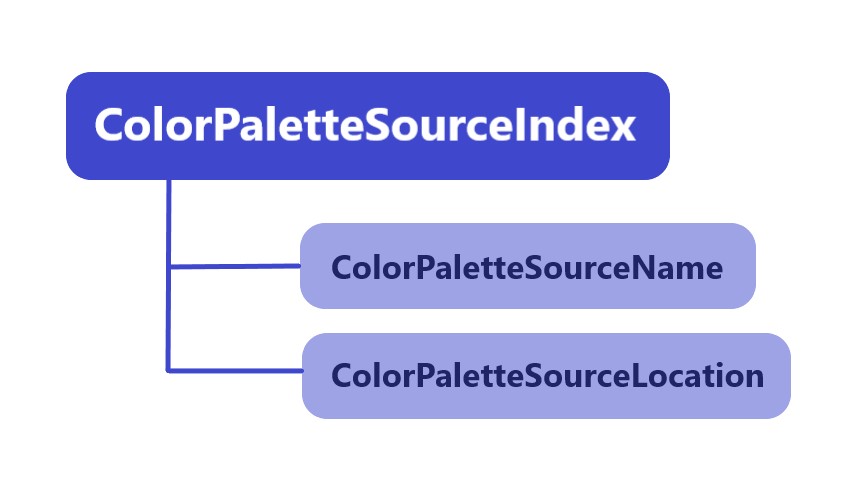
Over the course of two months, I developed a specific metadata schema that will document color design decisions that can be integrated into enterprise design systems. I intended for the schema to be used as a reference by UX design teams and individual contributors and to make onboarding easier for new team members.
Problem Statement
At the time I was developing this project, businesses were just beginning to introduce design systems to streamline their UX design processes. Colors play a key role in branding, communication, and interface design, and I noticed that many of these systems included extensive information about what colors should and should not be used within certain contexts. I decided to develop a metadata schema that would make it easier for design teams to record crucial information about the color palettes they develop.
Users and Audience
UX design teams and individual contributors who need to document their color palette decisions
Timeline
2 months
Roles and Responsibilities
Sole developer (researcher, designer, and XML programmer)
Scope and Constraints
This was a graduate-level research project created to solve a real-world problem. I developed this project within a limited time frame but with access to free online resources and a student license to Oxygen XML Editor and Developer software.
Process
I started this project by first conducting extensive preliminary foundational research into both the technical aspects of color models and public design systems. A few of the design systems I chose to investigate included Mozilla, Atlassian, and Morningstar. This in-depth research helped me to fill knowledge gaps and introduce me to crucial information I would later use to design my metadata schema.
Next, I used my research findings to identify what information my schema would need to capture. These requirements guided me as I sketched my first preliminary design.
This first iteration highlighted areas where I needed to do more research on color models and their technical information. I circled back to the research stage, collected what I needed, and incorporated that information into my next design iteration.
At this stage of the process, I focused on developing the top-level elements of my metadata schema. Once I developed those, I shifted my focus to the sub-level elements. This was the point in the project where all of my preliminary research came in handy. I referenced the technical information I had gathered earlier about different color models to create refined sub-level elements that could capture useful and relevant information that a design team would need to know.
Once I had a fully developed iteration of my schema, I tested it by running it through a few different user scenarios. These scenarios helped me to decide which of these metadata elements needed to be mandatory and which could be optional, and which ones should be repeatable when necessary. In the end, these tests exposed holes that I filled in my final iteration.
Outcomes and Lessons Learned
The outcome of this project is a fully functional metadata schema that could be deployed in a company’s design system.
Looking back on my project, I realize that the final product could be improved in two ways: running it through rigorous user testing and introducing elements that include accessibility information.
Although I conducted preliminary research on technical color elements and design systems at leading companies, I failed to speak with any actual users of design systems to understand how they incorporate and reference color information. Also, I was not able to test the schema in a real-world setting.
Additionally, I failed to include any elements that would collect information related to web accessibility. If I return to this project in the future, I will introduce top-level and sub-level elements referencing the Web Content Accessibility Guidelines developed and maintained by the World Wide Web Consortium Web Accessibility Initiative.
 Sarah M. Kimes