Project Overview
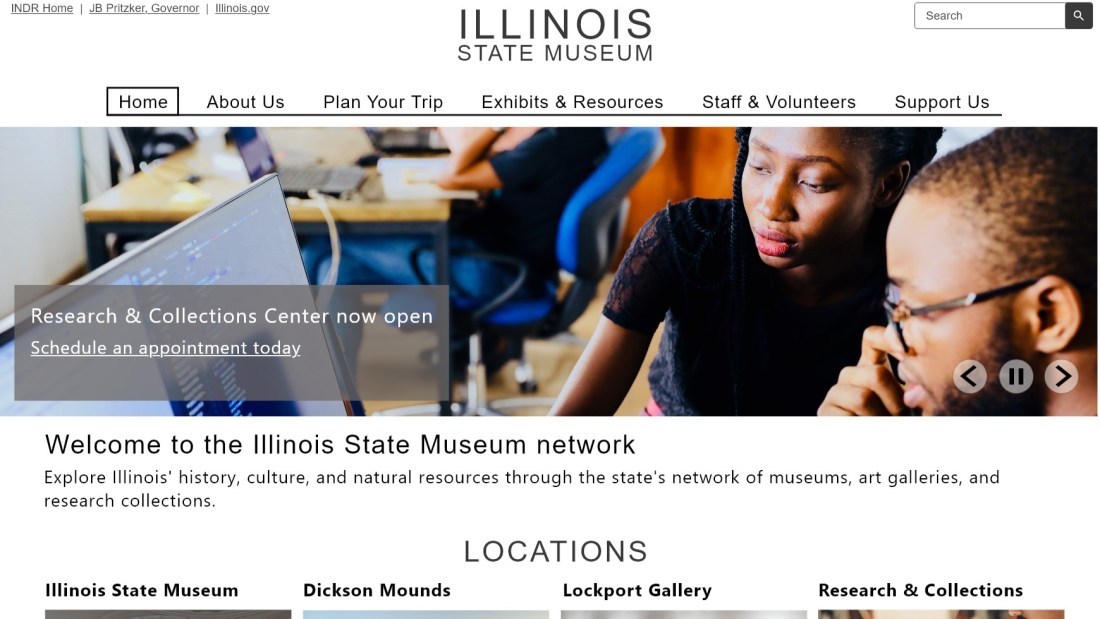
My team and I proposed to redesign the Illinois State Museum website as part of a graduate-level seminar project that took place over the Fall 2019 semester at the School of Information Sciences at the University of Illinois at Urbana-Champaign. I worked with two other graduate students to evaluate the existing website, conduct usability and validation tests, identify the most pressing usability problems, and redesign the website to address them using feedback from our research.
Problem Statement
My team and I approached this redesign project with this guiding question:
How do we redesign the Illinois State Museum website to improve its usability, accessibility, consistency, and interactivity?
Users and Audience
General visitors (physical and online) of the Illinois State Museum sites, as well as teachers and educators, students, and researchers
Timeline
August – December 2019
Roles and Responsibilities
I collaborated with two fellow graduate students to complete this redesign project. Specifically, I contributed to the following:
- Conducting preliminary usability tests
- Gathering and analyzing data
- Redesigning the homepage and events calendar
- Validating the designs with users, and
- Improving the website’s color accessibility
Scope and Constraints
My team and I worked within a 5-month time frame over the course of an academic semester in order to complete this project from proposal to final redesign. Our team consisted of just three graduate students and we had no funding to direct toward the project.
Process
We approached this project in stages, with a large portion of our time dedicated to conducting user research and analysis.
Research
As a team, we analyzed the Illinois State Museum website to identify any glaring usability issues. From there, we developed a list of tasks we could ask users to complete for usability testing purposes.
Next, we conducted six usability tests with six different users. We gathered feedback from the tasks we asked them to complete and analyzed our findings together. Their feedback helped us to identify the most important and pressing usability issues that we needed to address in our final redesign.
For the events calendar, we analyzed four other existing state museum calendars to see how they approached and solved this particular design issue. I and another team member conducted cognitive walkthroughs and heuristic analyses to identify any problems that these existing solutions might have.
Usability Problems Identified
These existing issues include:
- Inconsistent navigation links from webpage to webpage
- Poor color contrast leading to limited visual accessibility and readability
- Distracting carousel banner with no user controls available to pause or stop its movement
- A calendar of events that has limited interactive elements
Knowing which issues plagued our users gave us a direction to work and guided us through the final stages of the project.
Design
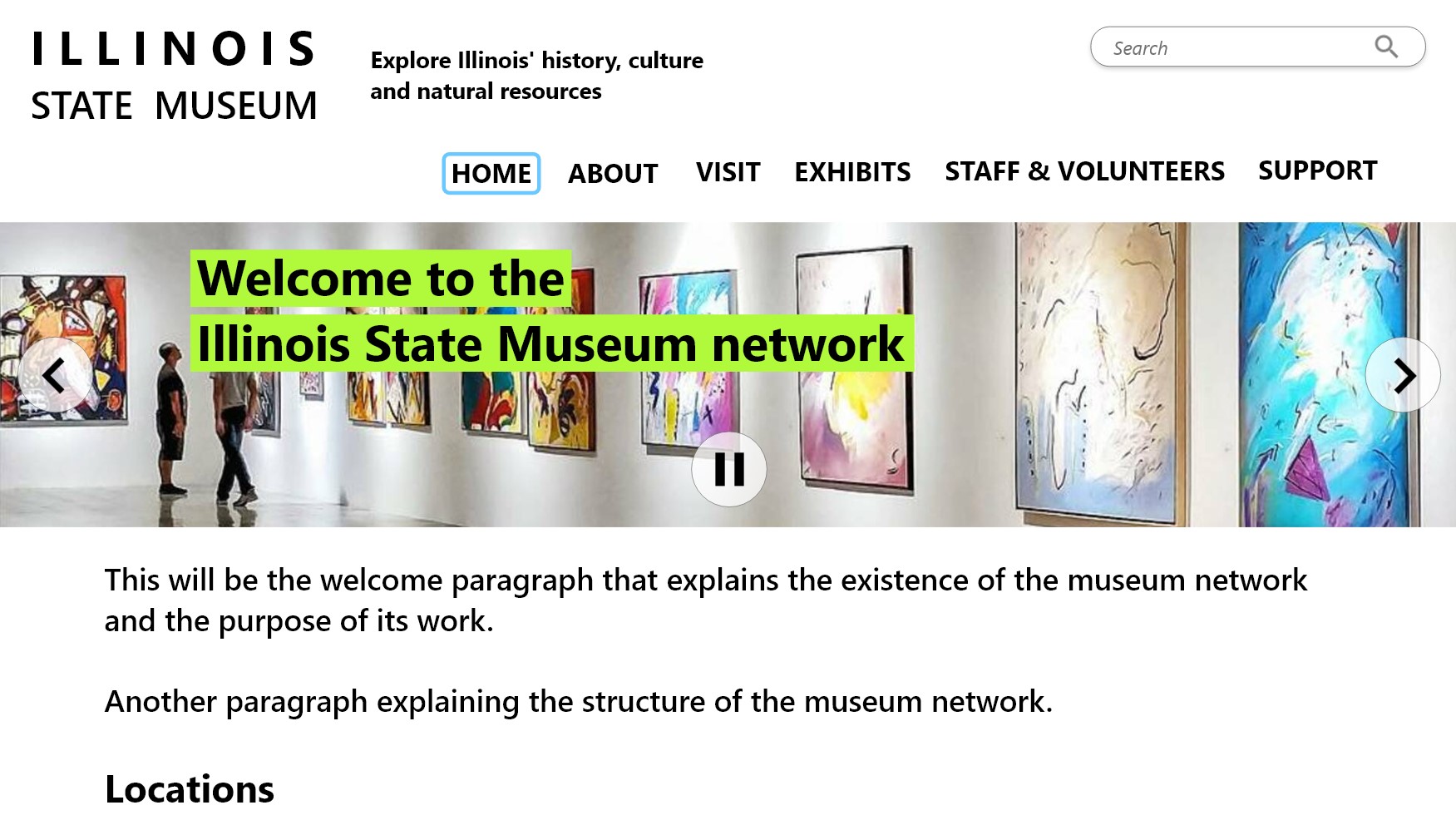
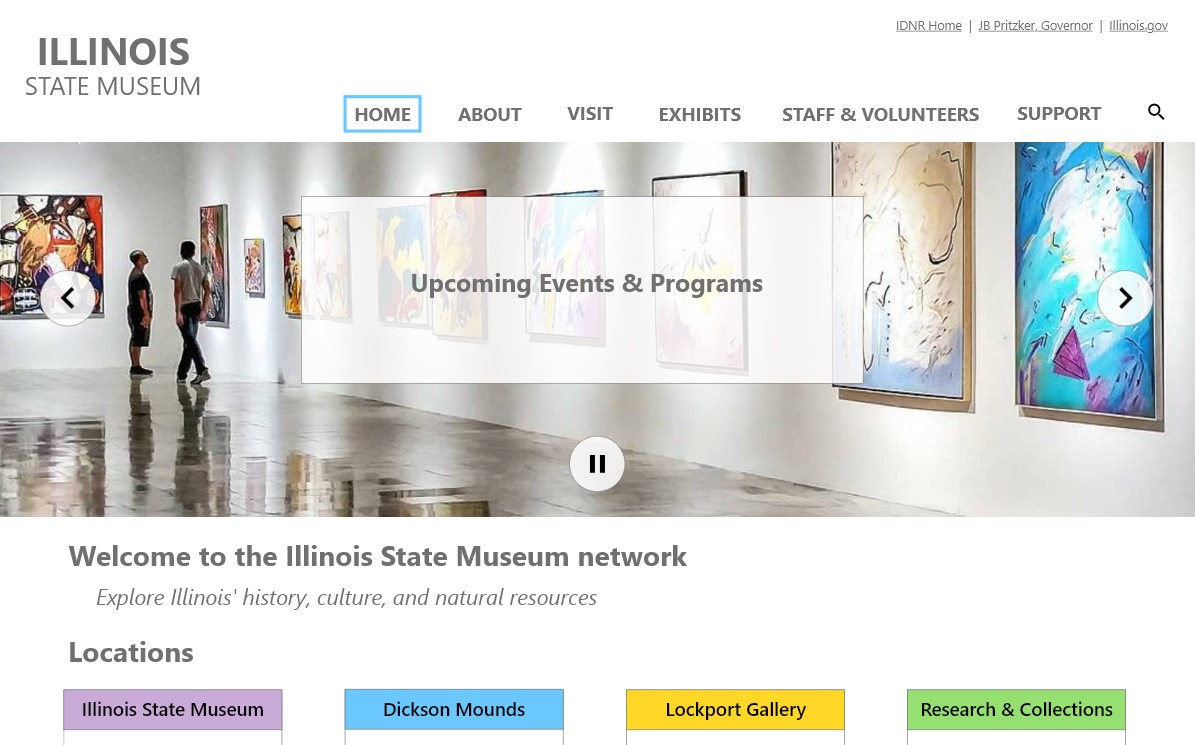
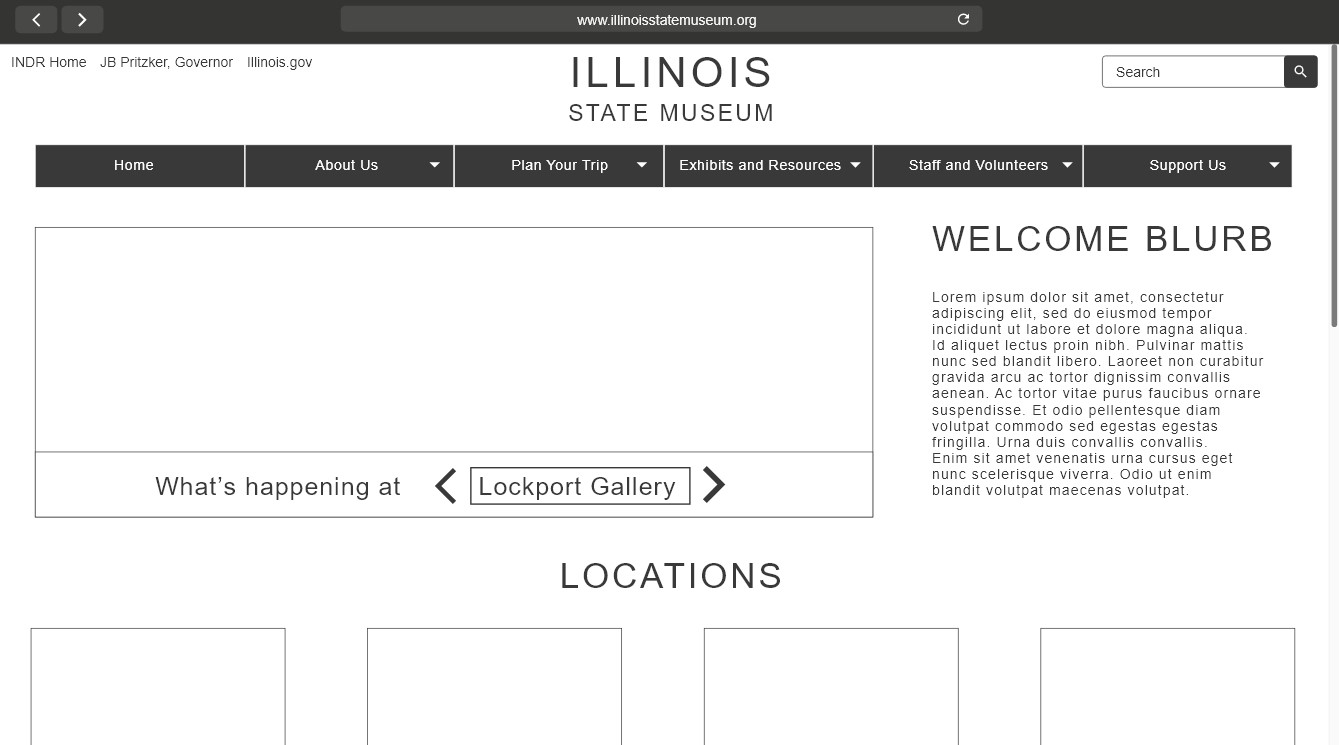
After analyzing the data we gathered from our research, we used that information to guide our design decisions. While my two team members drew rough wireframes of our early redesign ideas and led card sorting exercises to refine the navigation, I began creating several color palettes to increase the website’s color contrast and accessibility.
From there, we began rapidly iterating on several proposed redesign ideas.
Early Homepage Iterations

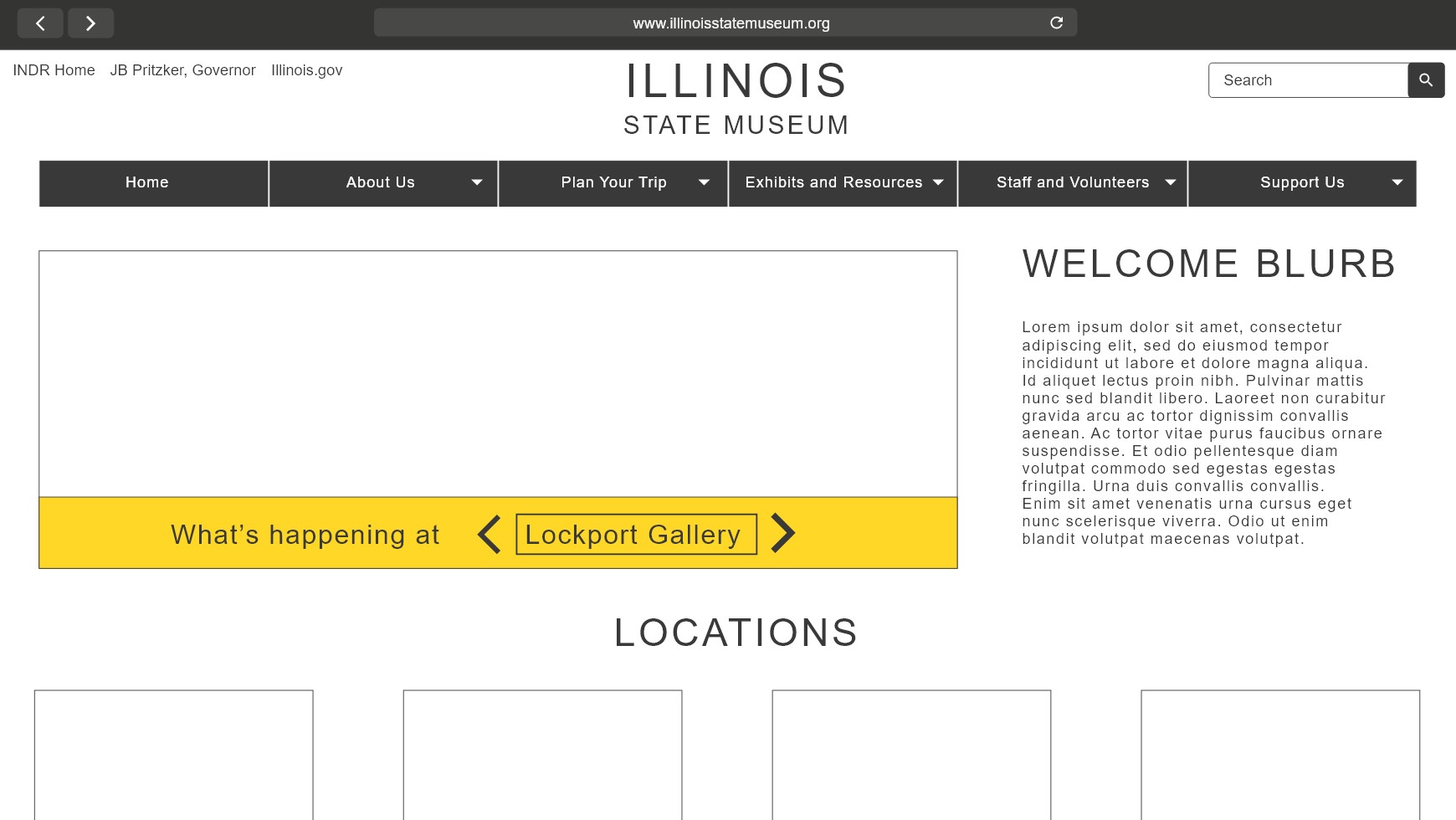
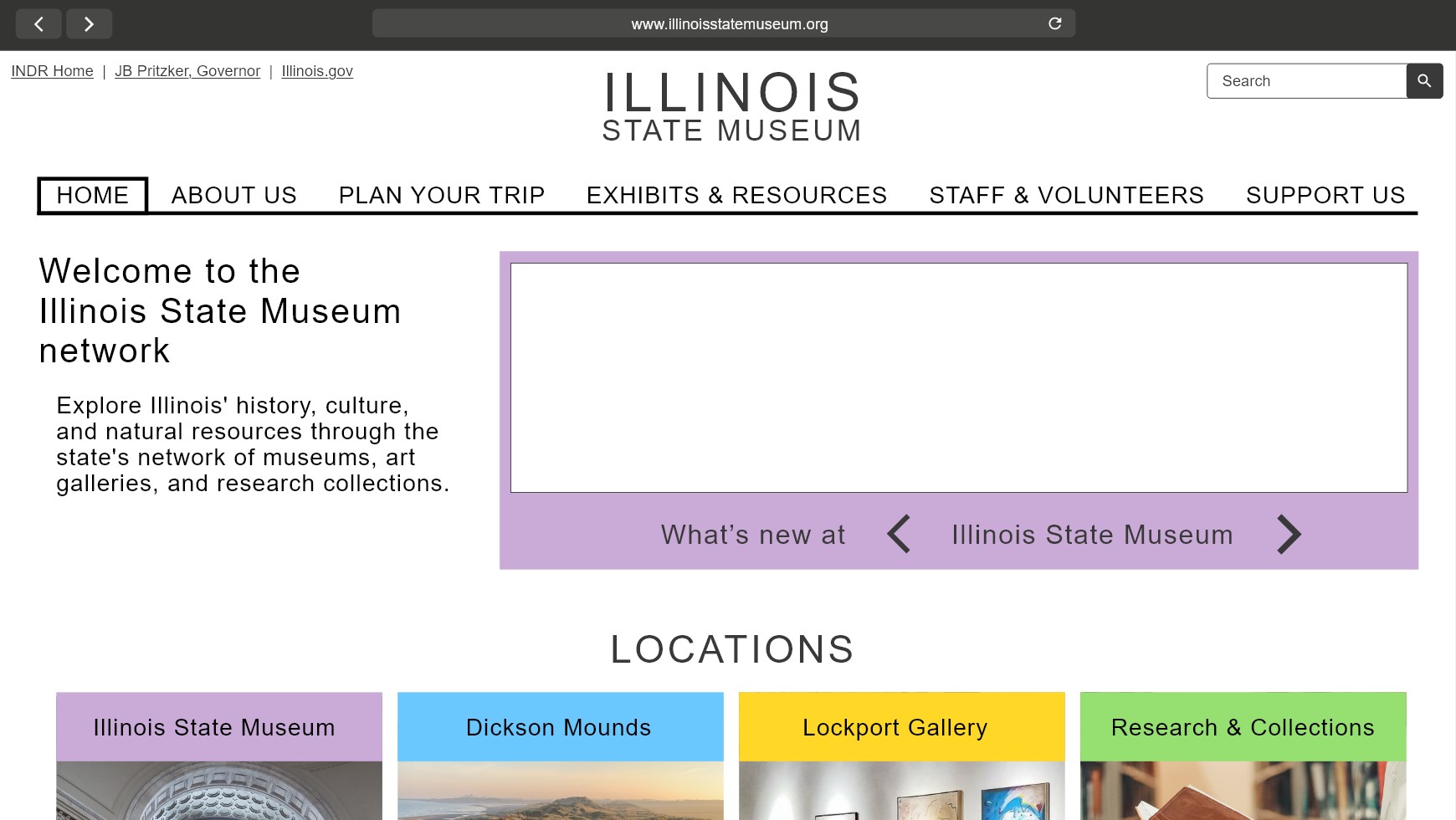
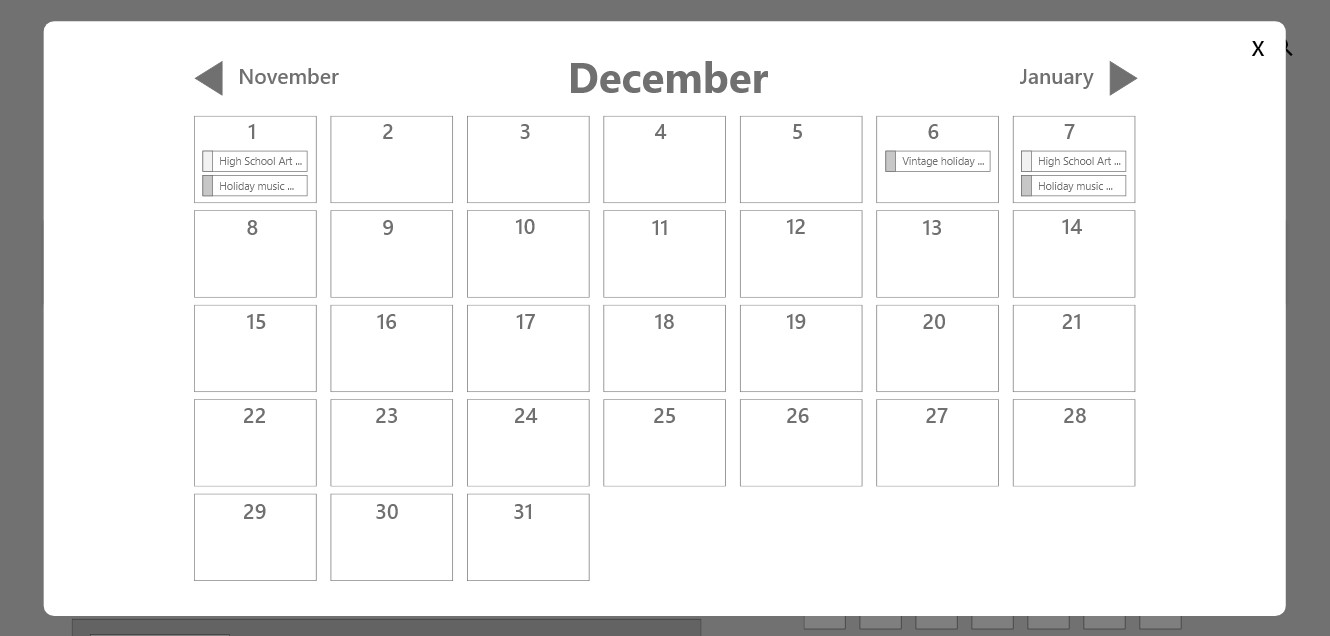
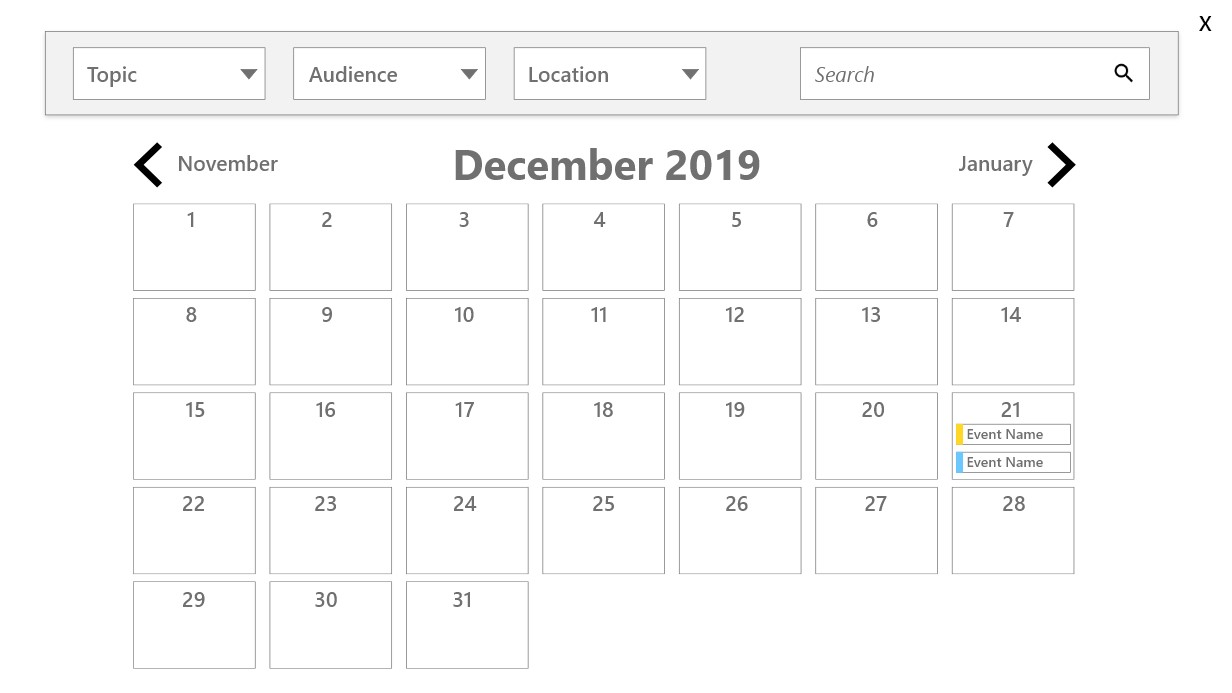
Early Events Calendar Iterations
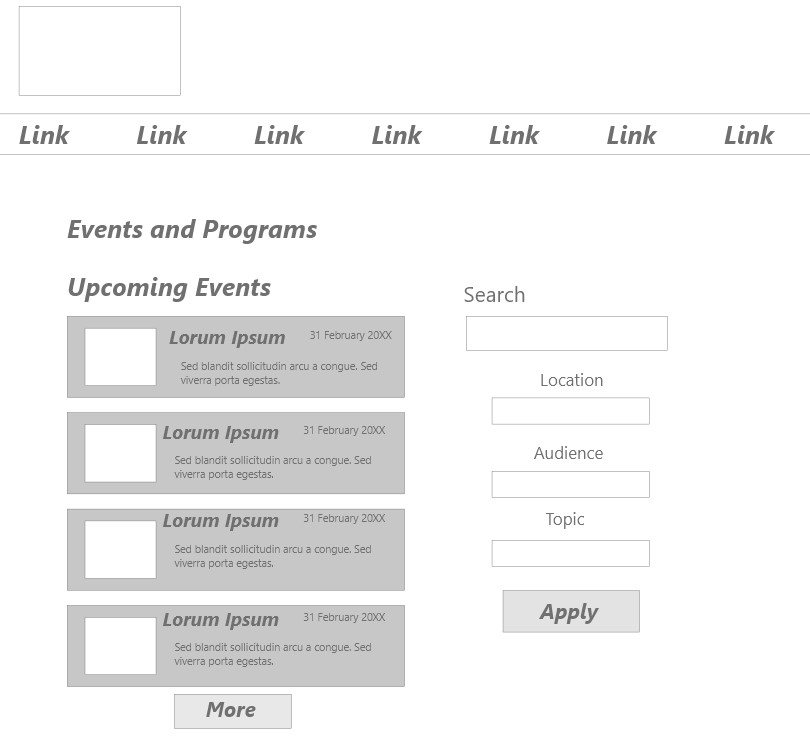
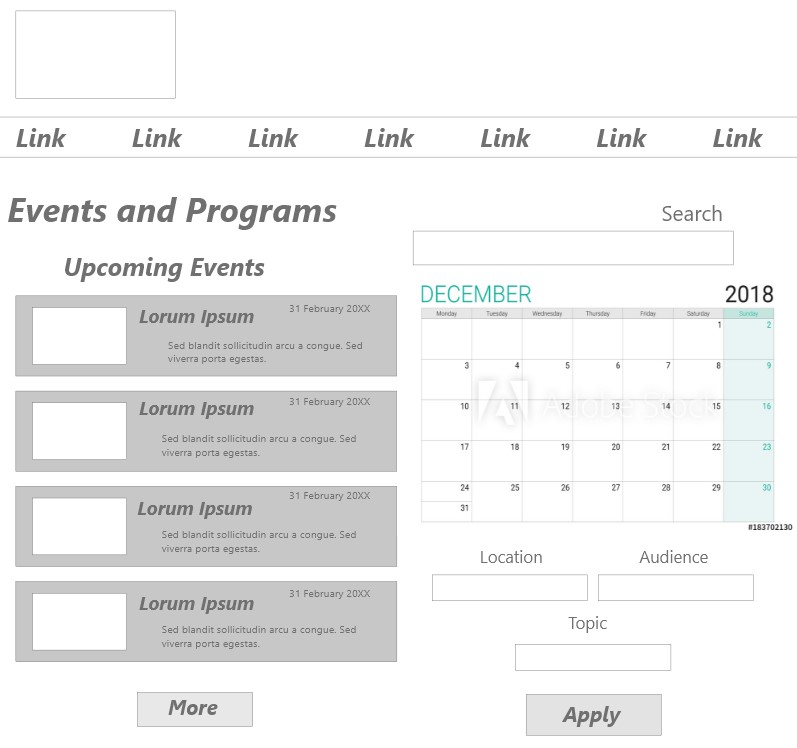
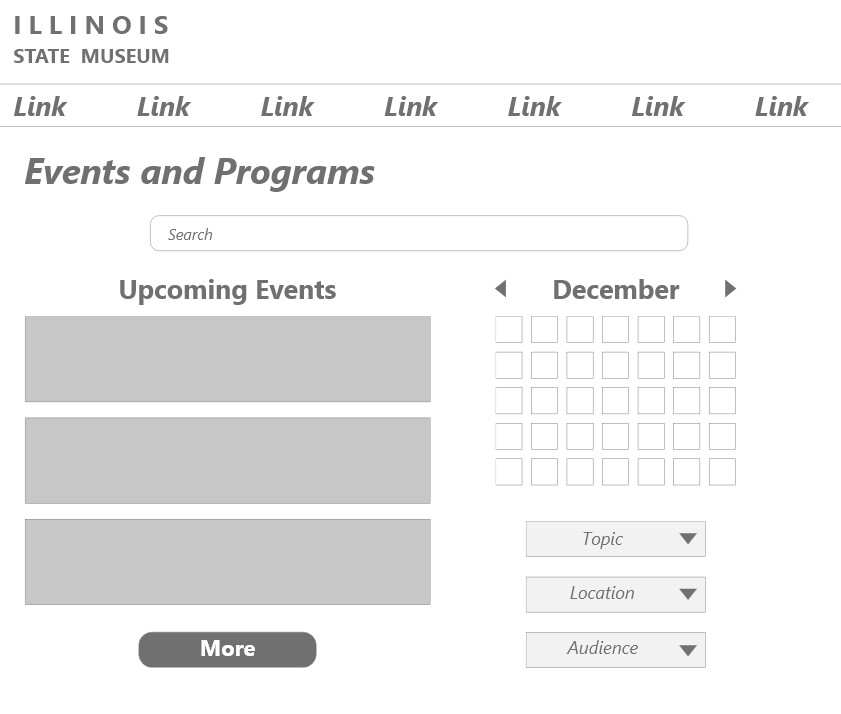
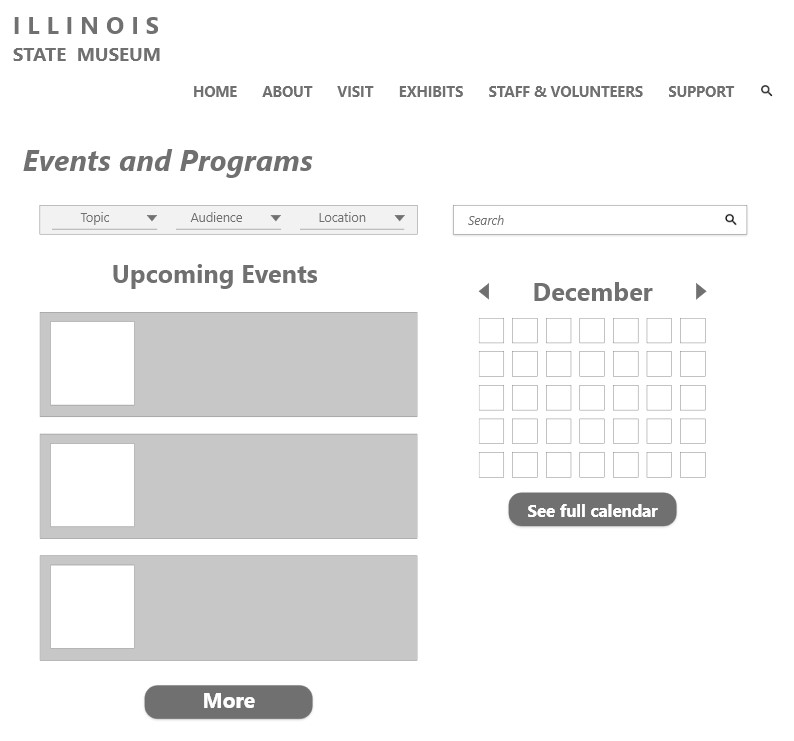
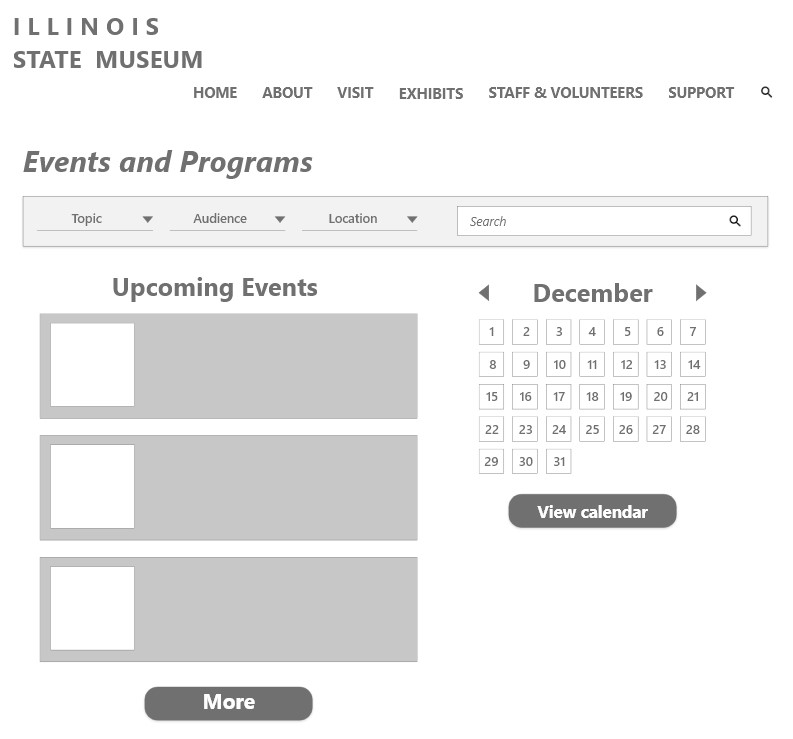
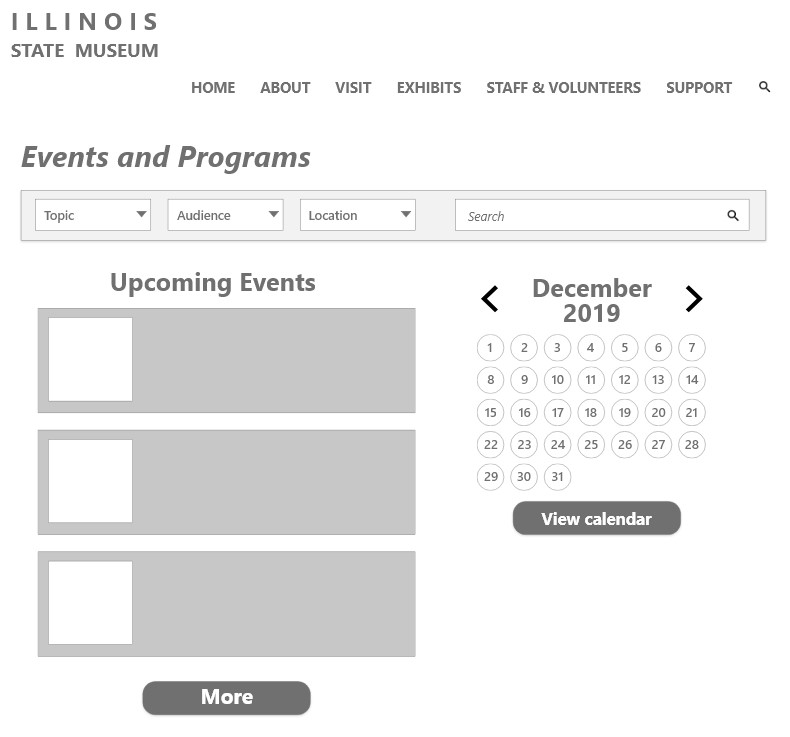
Validation Testing
Before settling on a final redesign for the events calendar, one of my team members and I conducted informal validation tests. We tested with four people and asked them a limited set of questions to validate a number of design elements that we incorporated into our early iterations. These tests confirmed that we were on the right path, which gave us the confidence to move forward with our final redesign concept.
Outcomes and Lessons Learned
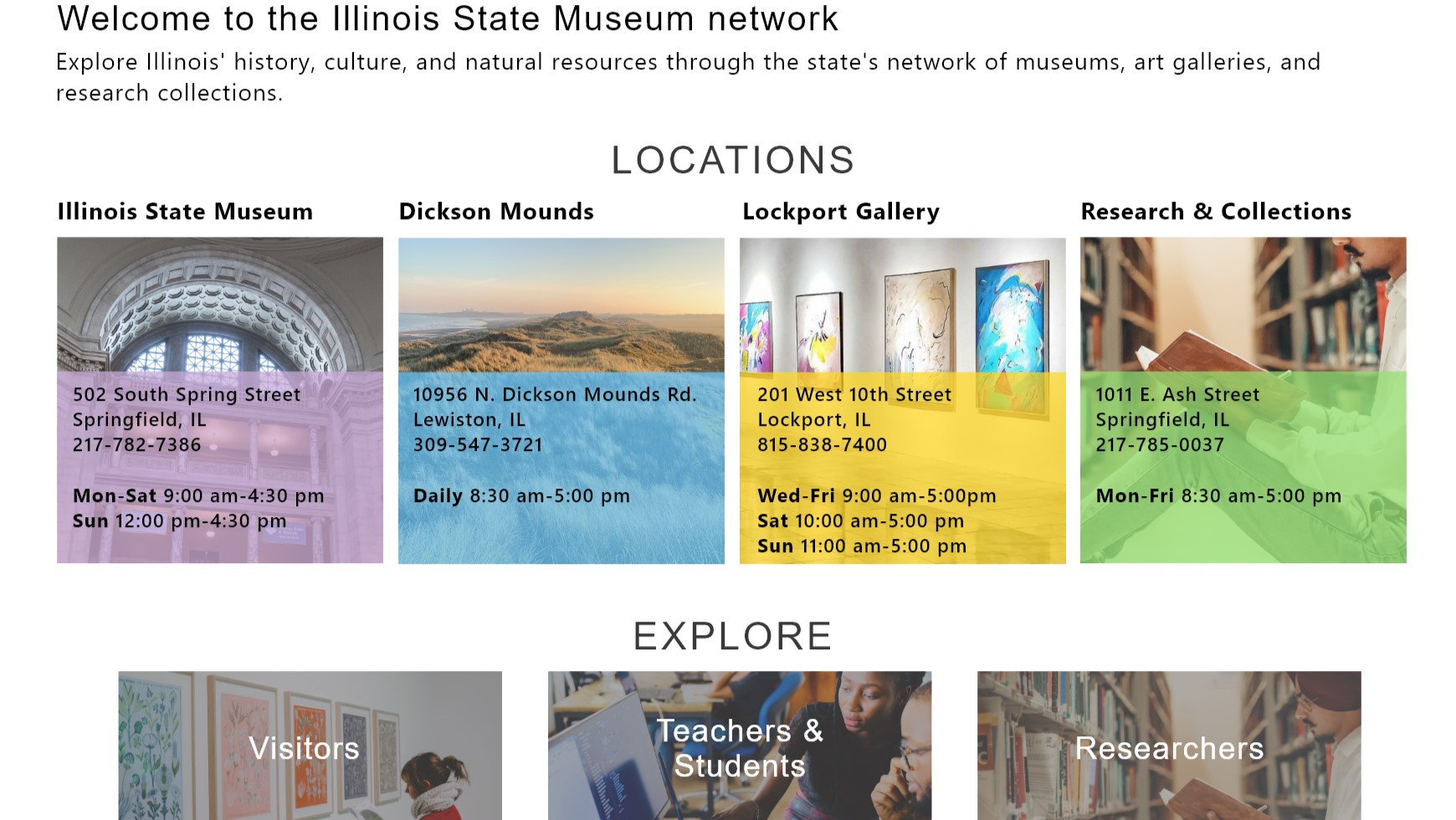
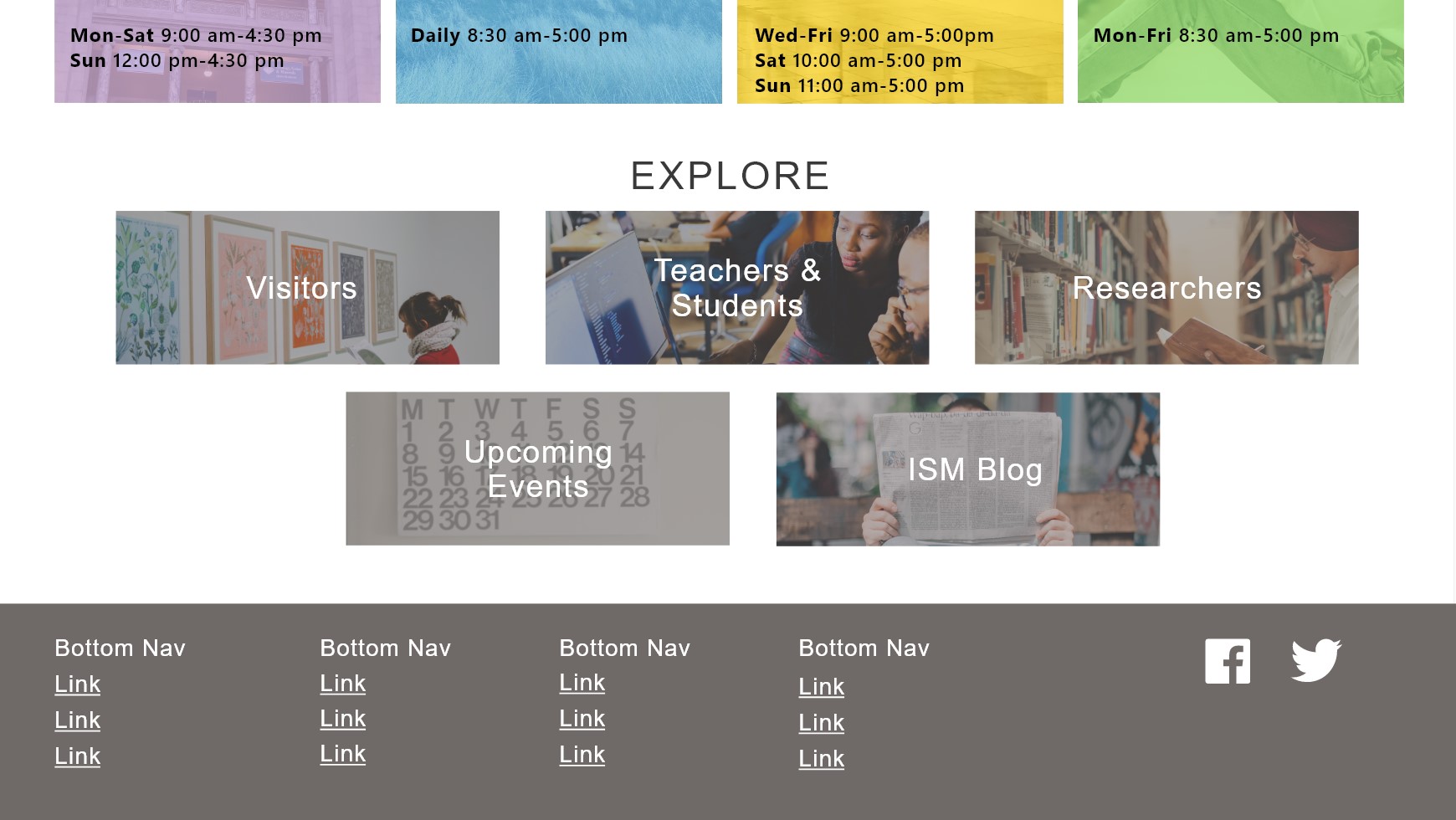
Final Redesign
Illinois State Museum homepage
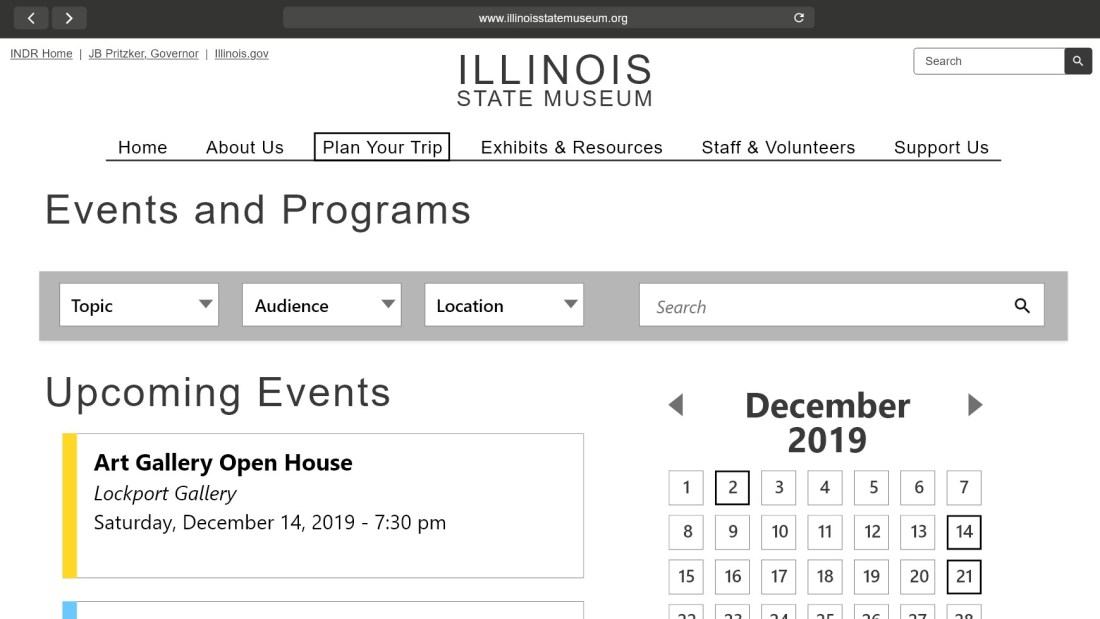
Illinois State Museum events calendar


Lessons Learned
One of the biggest lessons I learned from completing this project was how important our preliminary user research findings were to our entire design process. It influenced what areas of the website we redesigned and how we redesigned them. If we had to ask, “I wonder if the user…”, we knew we needed to stop designing and ask the users themselves.
 Sarah M. Kimes